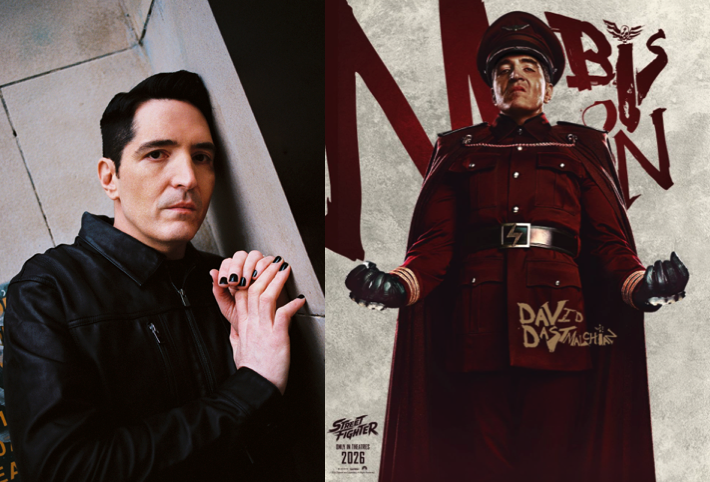
The Dark Knight. Prisoners. Blade Runner 2049. The Suicide Squad. Dune. Oppenheimer. David Dastmalchian has spent the last 20 years building a prestige repertoire few character actors can match, culminating in his arresting leading turn in Late Night with the Devil. The premiere auteurs of the 2000s trust his abilities when naturalistic depth, specificity, and clarity matter most. Audiences trust that his name in the cast list will bring pathos and sincerity to the project, and it is that same trust that draws his peers to lie in coffins and discuss death and the unknown on his Grave Conversations interview series.
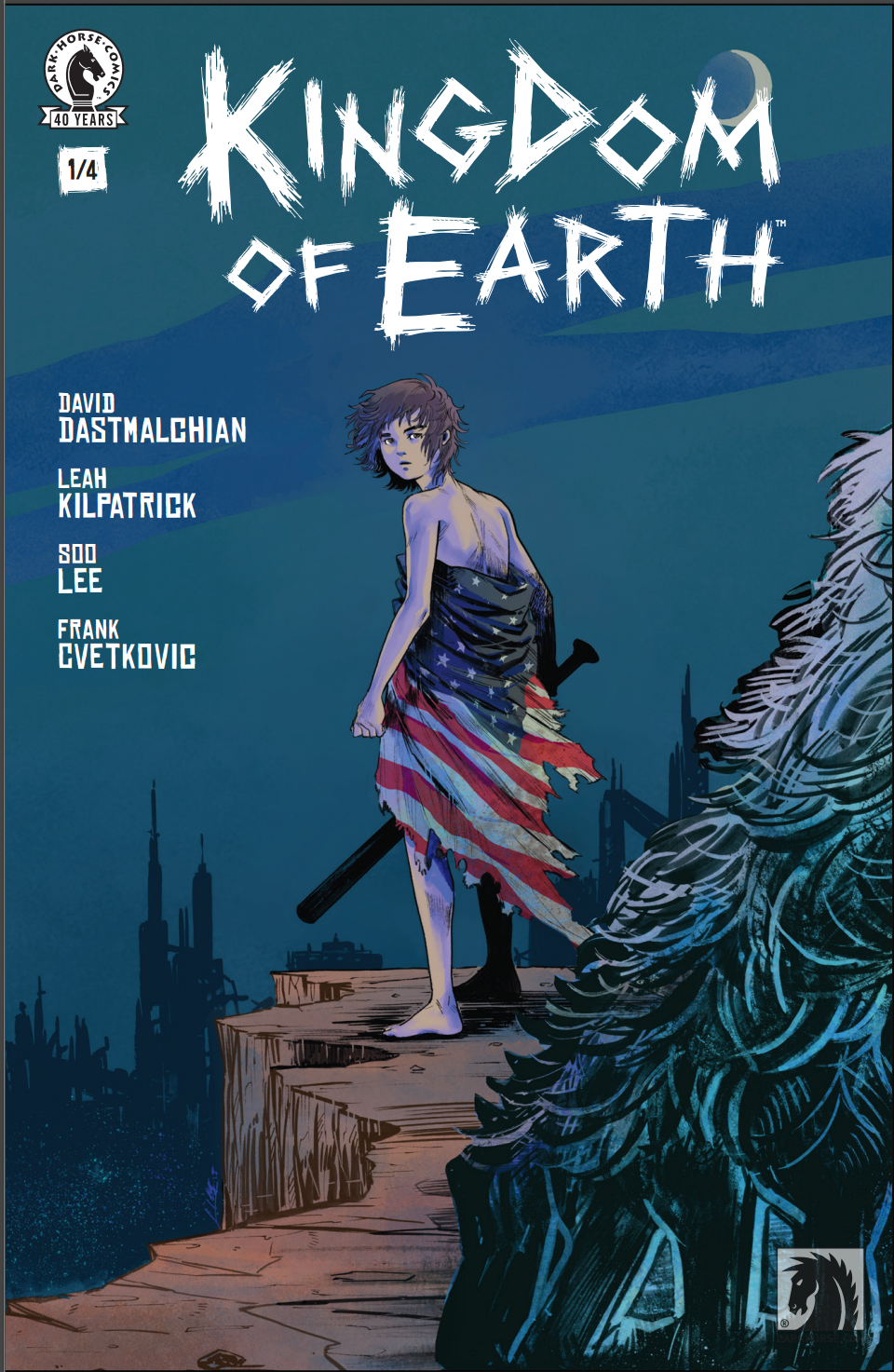
At New York Comic Con, I had an opportunity to meet David alongside frequent collaborator, actress, and producer Leah Kilpatrick. We discussed their work together, from Grave Conversations to their creative project with Dark Horse, Kingdom of Earth. What follows is a brief examination of their respective outlooks on death and the unknown as it relates to their creative and personal experience, including the genesis of Kingdom of Earth and the roots of its factions. The exchange has been lightly edited for length and clarity.
Christian Davenport: David and Leah, it’s great to meet you.
David Dastmalchian: Thank you.
CD: I appreciate you taking the time to answer a couple of questions. Dave, I want to start with you. How does it feel to be a character actor who lends legitimacy to the genre projects that you take on, rather than the other way around?
DD: Man, that’s your, uh, I appreciate- I’m glad that you feel that way. I do my best. I hope that that’s what people would think about me as an actor because I take every role- I take this job very, very seriously. And at the end of the day, it’s kind of a weird, silly job. You’re like dressing up in crazy costumes.
You’re playing make-believe; you’re bringing to life, you know, characters that were either imagined for his theater productions hundreds of years ago by Shakespeare, all the way up to characters that were imagined from the minds of people like Stan Lee and Steve Ditko, all the way across the board to Jack Kirby.
And, you know, I think about video games, and the way in which they’ve been such an important part of the cultural conversation now globally for decades. Getting to be a part of bringing characters to life, it’s an honor for me. I feel a great deal of pressure because I want to make sure the fans enjoy the experience. And I also love the craft of acting. So I try to bring all the knowledge that I’ve been able to accrue over these years into the work.
CD: Amazing. Now you both work on the Grave Conversation series.
DD: Yes.
CD: And you deal very candidly with concepts of death and the unknown. What fascinates you both most about these aspects of the human experience?
DD: For me, I want to normalize conversations around death and dying. I think that it’s something that we’ve, up until- well, we still have kind of relegated either, like in faith communities, we talk about death; in horror movies, we talk about death. But when do we actually sit down and just talk and communicate about that that’s not in a therapy session?
Like, I know it’s not the thing that everybody wants to sit down, have a dinner party, and talk about death and dying. But also I think the more we normalize it, the less we’ll be afraid of it and the less businesses can exploit our fear of it. There’s a whole industry around death and dying that is exploitative.
I think that there’s a lot of mental wellness that comes with being able to talk about death and to remind ourselves that we’re not alone. How about you?
Leah Kilpatrick: Gosh, I don’t know. I feel like- I constantly feel like I’m a burden. So I think the more that I talk about what I want to happen when I die, meaning for the other people. Like, how- what are they gonna do with all my stuff? I think about that a lot. That’s weirdly like, my thing.
DD: What do you want us to do with your stuff?
LK: Well, what I think, I would love to have a walk-through of my apartment so friends can come and they can take things. And then they have a way to remember me by, or then they can just have free stuff to put in their apartment. But like, I think about all the stuff that we leave behind.
And I think in a way, talking about that more makes me want to be more alive while I am. It’s just, it’s interesting. When you talk about death, so many different things come up. It’s always kind of a evolving conversation.
DD: I love that idea. I love the idea of my funeral being at my home, and then all my friends and family coming and then being like, “Alright y’all, every book on my bookshelf, everything on the wall… I want this place empty by the time you all leave so we can hand this space over to the next person,” you know?
CD: And there’s that, but there’s also having the ability to share a piece of yourself with the people who are still here so that they have that, they retain that connection.
DD: These assholes are gonna go sell it on eBay.
LK: Yes, that’s 1,000% what’s happening.
DD: I know my kids are gonna be like, “I don’t want this dumb old comic book, Dad, I want a trip to Cancun.”
CD: Would you say that your own experiences have deepened your connection to the other side, independent of your work and entertainment?
DD: I do. I think that my own, like, psychological journey as a human being on this earth has been so tied to a relationship that I had with the beyond and with the concept of god since I was a little boy and what happens to us after we die.
And there was a lot of fear and intimidation. There was a part of that. And as I’ve grown older and as I’ve learned what my, you know, inner journey I think is about and what my consciousness is seeking, I feel this connection to a totally different, much more love-based power that exists outside of this physical plane.
And it’s why this physical plane, I think, a lot of the conflict of it is because it’s so ego-based. And because it’s so much about beginnings, middle, and ends, and so much about fear and the unknown, that horror is such a fertile place to explore.
I don’t think that I would be nearly as interested in the horror genre if I was just the expansive, like, transcendence of my spirit beyond this physical plane. I wouldn’t give a shit about horror. I love horror because we live in horror every day.
The world around us is beautiful, and I love people, and I love the world, but they also scare me more than anything in the world. It’s terrifying.
LK: What was the question?
CD: Just if your personal experiences have kind of deepened your connection-
LK: To death?
CD: To death and to the other side, outside of your interest from the entertainment perspective.
LK: No, it’s tough, cause it’s so attached to the entertainment.
I mean, that’s a good question. I… I feel like I’ve had traumas in my life, but they haven’t been related to death. So I only can really associate those deeper, other side-ly things through cinema.
And I know your question is like, “Get away from that.” But I think I then have to creatively put it into my own art to imagine what that could be like. Or to process like a horrific-
DD: What was like the biggest death in your life? You haven’t lost your parents yet?
LK: I’ve lost all my grandparents. Lost a lot of pets. My godfather, that was a bad one. But yeah, I don’t know.
DD: Pets are hard.
LK: It’s the thing that, I think, like my aunt had dementia, and she just was gone while she was here. And I think about… Every now and then, I think back, and I go, “She’s just gone.” I look around at all the stuff I have in my apartment and all the things, and I’m like, “Does it matter?”
I don’t know. I think really… I can’t really. It’s such a weird thing to think about because I almost feel selfish for having all these things. At the end of the day, I’m- it’s just gonna be gone. And then a few people will be sad for a couple days, and then it’s just, you’re done. And that’s trippy. I don’t know.
DD: That’s it.
LK: I don’t know. It’s weird.
DD: Yeah, it doesn’t mean anything. All the stuff.
LK: Yeah, it doesn’t mean anything.
DD: Things, they don’t- the only value they hold is the memories, the emotions that they can inspire within us. And that’s why I do like things. I like collecting things I like, but I don’t idolize them, you know?
And I don’t wanna put them on a pedestal. And if I lost things or if one of my kids broke one of my old vintage toys, I don’t really wanna give a shit cause it’s not about, like, their value. Their only value to me is just in, like, “Oh, man, playing with these toys reminds me of what it was like when I was a kid, and I had joy.”
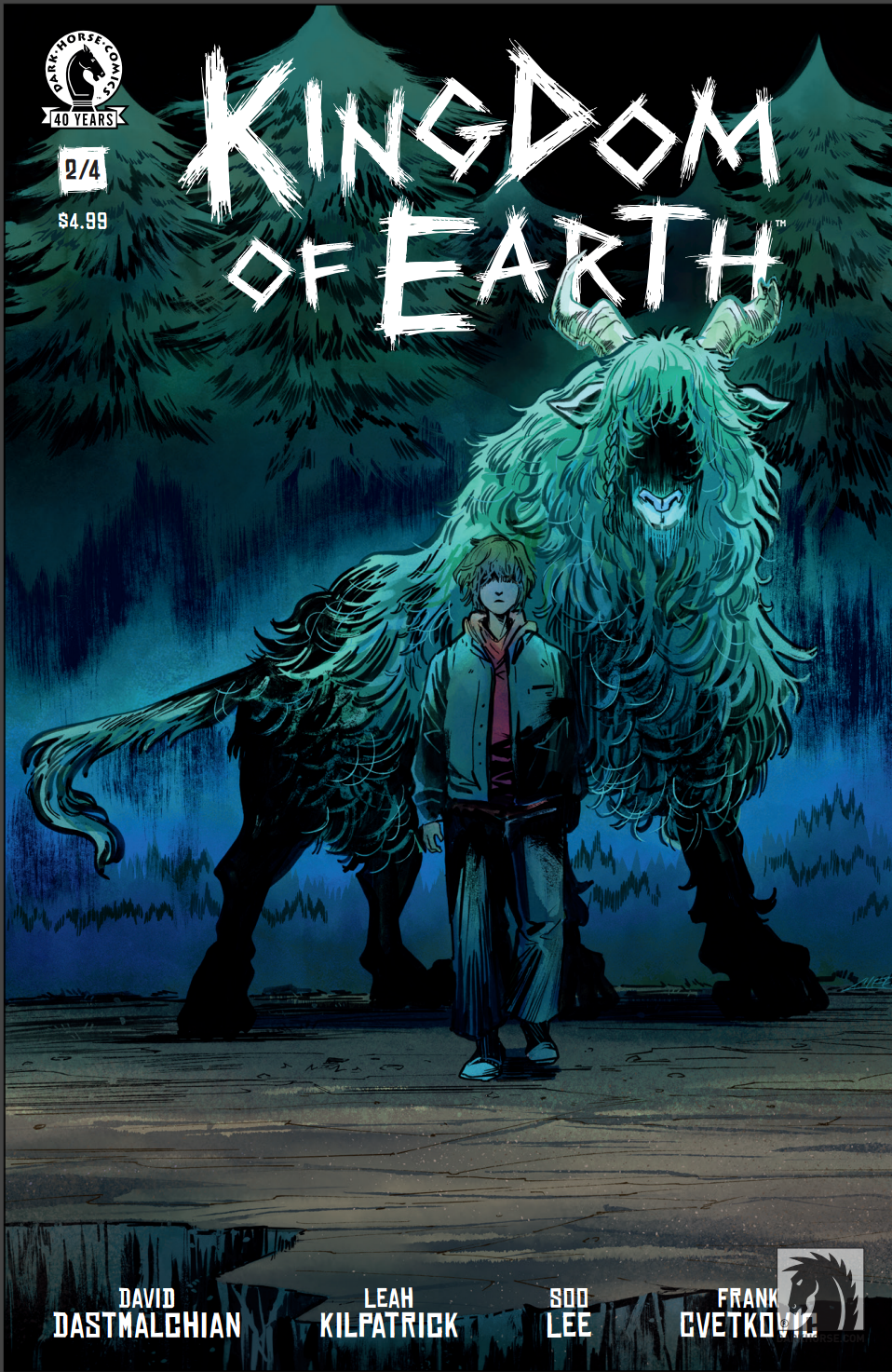
CD: I do really want to get to Kingdom of Earth. Now, the story focuses on familiar supernatural archetypes locked in a struggle for supremacy. What inspired your collaboration on the narrative?
DD: I love writing with Leah. I love telling horror stories.
I think we’re living in a horrific timeline right now when it comes to power structures and the way in which our society is being dominated by powerful monsters that might look like humans, that wear suits and sit in offices that are oval-shaped, but they’re still monsters.
And so, to take my imagination and to combine our imaginations and our love of mythology and monsters, I put it into a big battlefield that is all the monsters that we’ve ever imagined fighting it out, trying to take control while the humans are just struggling to stay alive. It’s like, what a fun, kick-ass, wild world. And we love hanging out. We love writing together. We love bouncing ideas off each other. So we got so lucky. Soo Lee wanted to draw the book, and man, she just crushed it.
CD: And for you, what, what kind of, I guess, inspired the collaboration? Was there something specific that brought you to the project?
LK: David… No, we, I mean, we talk about monsters all day. Like we just love all different types of monsters… What, like, what scares people is very fascinating to us.
David had the idea. He’s very much like a big world builder, David is, and he’s very good at it as well.
And I’m more of a detail person. But since we talked about it so much, we were like, “What if they were actually here? And what if they actually got to play together?”
David is into Magic, and he’s getting me into Magic: The Gathering as well. And you see how all these characters can come together to build a deck. And so it’s just a fascinating thing that doesn’t happen that often.
I think the first time we really saw it was Cabin in the Woods, where you see all these monsters in these glass cages and then they’re released.
And we just love the idea of different cultures, different continents, and what their lores are, and them rising from where they originated. And what that world would look like with all these different types of monsters blended together.
DD: Battle royale…
LK: Trying to figure it out. Yeah. And also to do the mundane, like figure out electricity. It’s kind of funny to see a monster…
DD: Yeah, how do they do communication? How do they do transportation? Now that the humans are all, you’re hiding.
CD: I noticed that you pay a lot of attention to the logistical and the structural aspects of the society.
DD: That drives me crazy. When you’re watching a movie or saying, you’re like, no one’s thought to explain how the hell is electricity supposed to work right now?
You know. How is any of our cars running without gas stations? You know, like, so we wanted to explain that. And it created all this great tension between the monsters and their power structures and blaming each other. And then looking at the bass ackwards way that humans have been doing stuff is a funny way to examine, like, sociology.
CD: Absolutely, absolutely. Last question I’ll ask you guys. Some projects are really informed by the media. With Kingdom of Earth, is this something you’d be looking to see adapted? Or do you feel like the literary medium is where it belongs?
DD: No way, sky is the limit. There is no end of the possibilities. When Leah and I write ideas out, whether it’s TV shows, movies, comic books, there’s always the possibility that it could expand into another medium. I think with Kingdom of Earth, it could make an amazing animated series.
There’s the version of this becomes a runaway bestseller, and then some studio options it and Guillermo Del Toro makes the big movie trilogy version of Kingdom of Earth. Who knows? Sky’s the limit. I always say go, as you know, go as big as your monster lab wants to create it.
LK: Yeah. It’s too- we thought of the idea as well, of similar to kind of like how A Quiet Place did it. Where it’s so intimate, where we could really zoom into this world, but you can still hear, feel what’s going on the outsides without even needing to. And what would that look like, even becoming more intimate? Cause Kingdom of Earth is already, it’s in the Northern Territory that we call it sort of like North America.
And just not even knowing where they are, or do you just see these people trying to survive and not, I don’t know, the fear of the unknown, literally, of where they are or what’s around them.
DD: You realize that it’s like, there’s Candymans, and there’s Jasons, and there’s, you know crazy clowns, and there’s Godzillas, and there’s Wolfmans, and there’s Dark Watchers, and there’s Wendigos, all of it. Yeah. That’d be awesome.
CD: And it would give an opportunity to really humanize something that you’ve given a lot of scope and a lot of scale. And again, bring the intimacy into it, which is something that’s consistent with your work. Like Grave Conversations. The intimacy is always something that stands out about the work, and the authenticity of it. I appreciate your time very much. Thank you.
LK: Thank you so much. Thank you.
DD: Thanks, guys. That was awesome. Thank you, New York Comic Con.

David and Leah are truly a well-matched creative team, as their personalities synergize quite sharply even in this interview. I immediately see Leah’s point that, while David focuses on sweeping philosophical themes and socio-political nuance, Leah can be consumed with the gravity of granularity. Entangling those affinities produces a coiled tension, heightened by grave proximity to narrative inflection points. That binary cohesion serves their endeavors well, and Kingdom of Earth is richer for their partnership. Issues #1 – 3 are currently available from Dark Horse Comics, with issue #4 finale scheduled for a November 18th release. Additionally, David and Leah are collaborating on Panick Entertainment’s The Accessories, and David can be seen as M. Bison in Legendary Pictures’ Street Fighter, opening October 16th.
Christian Davenport
cable201@comicattack.net